

Canadian-made building products win more business when you market origin as a buying reason, backed by proof, instead of a flag on the packaging.
Tariffs have turned country of origin into a daily question for builders, dealers and specifiers on both sides of the border. Some buyers now ask for local product. Others worry about price swings. Either way, a manufacturer that explains its origin clearly gets the call first.
This is our view from working with building product manufacturers, and it applies to US-made lines selling into Canada as much as the reverse. It sits inside the wider approach in building product manufacturer marketing.
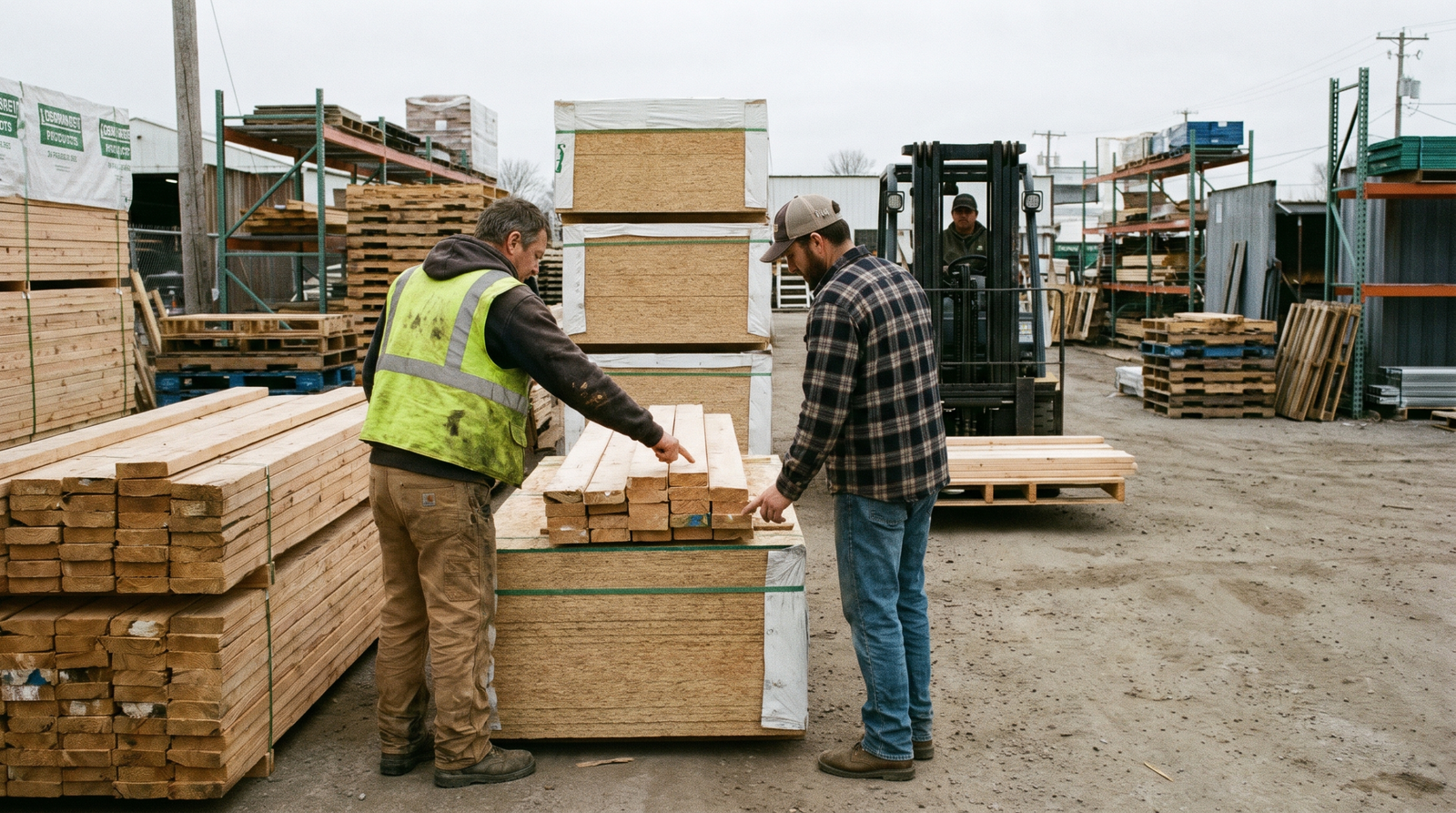
What the trade fight changed for Canadian-made building products
The facts moved quickly in 2026. The National Association of Home Builders reported on August 24, 2026 that 50% tariffs were proceeding on about $20 billion of Canadian goods, including plywood, engineered wood products and Portland cement, while softwood lumber was not covered. Canada signalled dollar-for-dollar retaliation from September 8 (NAHB). Rules like these change often (the U.S. Census Bureau also tracks the wider construction spending picture), so check current measures before quoting any of them to a customer.
Cost data tells a mixed story. CMHC found that from late 2024 to mid-2026, wood, plastics and composites rose 0% across 15 Canadian markets and concrete rose 1%, while structural steel framing rose 8% and plumbing 14% (CMHC). CMHC also estimated that wider use of Canadian wood products could cut ground-oriented housing costs by up to 17% in some centres, under its stated assumptions.
In short, origin can mean price stability for some categories and risk for others. Your marketing must say which one applies to your product.
Specified, invited, chosen: how origin works at each stage
Specified: make origin a documented fact
Architects and engineers need data, not slogans. Therefore, add place of manufacture, material sourcing and any relevant standards to every spec sheet and product page. Our guide to product specification marketing explains how those files get used.
Invited: make supply feel safe
Builders and dealers invite suppliers they trust to deliver on time. Accordingly, publish lead times, stock policy and how you handle price changes. Likewise, explain how your supply chain limits exposure to cross-border cost swings.
Chosen: make the reason easy to repeat
The final buyer needs one clear reason. Maybe it is local jobs, shorter shipping or tested performance. Whatever it is, state it in one sentence that a dealer can repeat.
What proof beats a maple leaf
Origin claims are only credible when they are specific. Because buyers hear vague claims constantly, they discount them. These proof points carry more weight:
- Named plants and locations. Show where each product line is made.
- Material sourcing. Say where the raw material comes from, and be precise about what is imported.
- Third-party marks. Use certifications and test reports you actually hold.
- Customer outcomes. Use permissioned examples only, with dates and project details.
Never overstate origin. In both countries, content and labelling rules apply to made-in claims, so have your legal advisor review wording before it goes live.
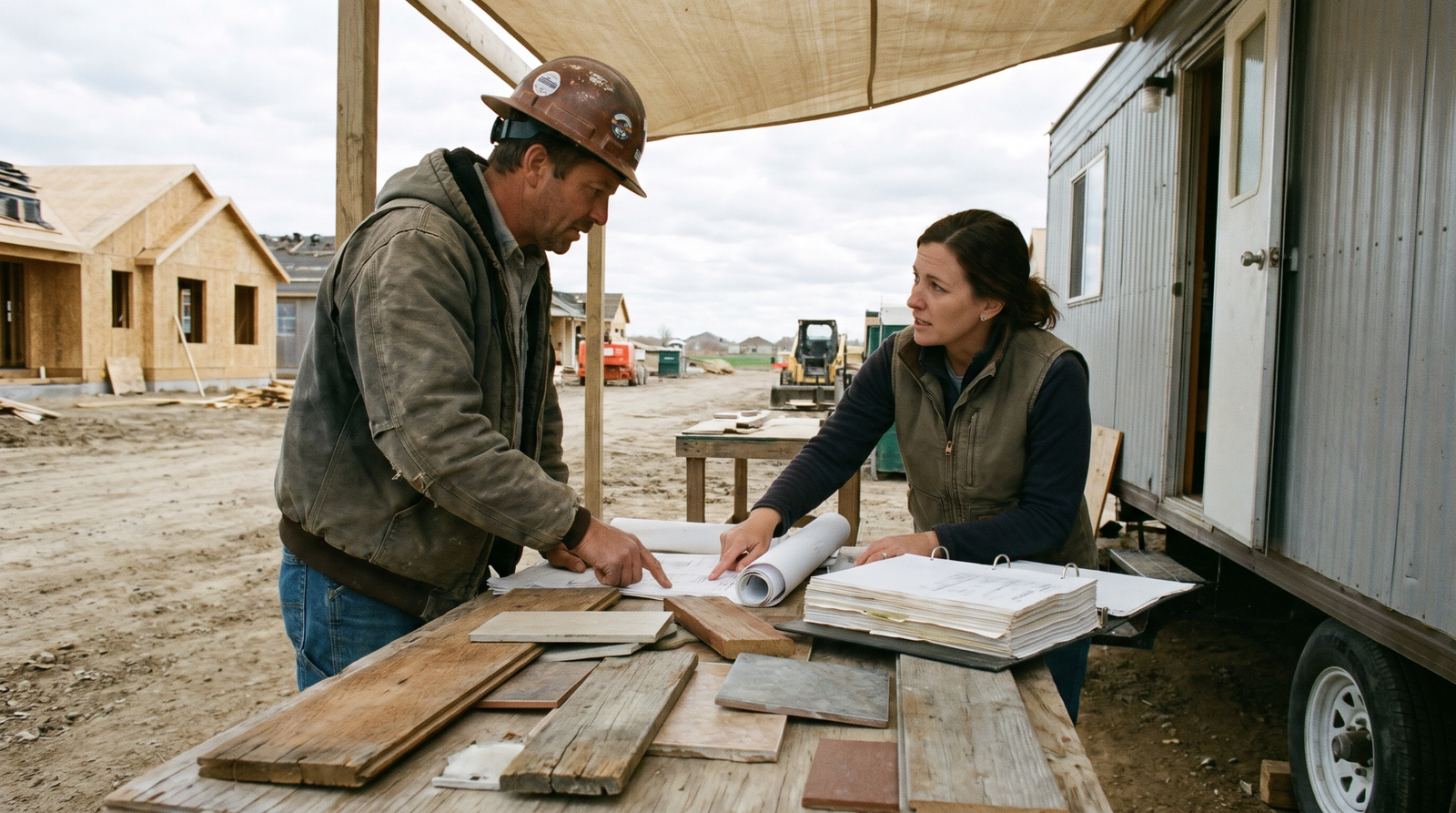
Cross-border positioning: do not market to one country
Many manufacturers sell on both sides of the border. As a result, a Canadian-only message can alienate US dealers, and a US-only message can lose Canadian ones. Instead, build origin pages for each market and let the buyer see what matters to them.
| Buyer | Likely worry | What to show |
|---|---|---|
| Canadian builder | Imported cost swings | Local production, stable lead times |
| US dealer | Tariff exposure on Canadian goods | Pricing policy, stock in US warehouses |
| Specifier | Product substitution | Full spec files, named standards |
A 90-day plan for origin-led marketing
- Weeks 1 to 3: audit every product page and spec sheet for origin facts.
- Weeks 4 to 6: publish plant and sourcing pages, plus a supply-continuity page for dealers.
- Weeks 7 to 9: write two permissioned project examples, as covered in construction case studies.
- Weeks 10 to 13: target search terms buyers use, using our construction SEO approach, and measure enquiries by source.
Give dealers a toolkit they will actually use
Dealers and distributors sit between you and the builder. When tariffs make buyers nervous, they field the questions first. Therefore, equip them with short, accurate material rather than hoping they will explain your story for you.
- A one-page origin sheet that states where each product line is made and what the lead time is.
- A price-change policy that explains how and when you adjust pricing, and how much notice dealers receive.
- Counter-ready answers to the three questions customers ask most about origin and cost.
- Project photos from nearby jobs so the dealer can point to local proof.
In addition, send these through the channels dealers already use. Email works well for updates, and a simple dealer page on your site keeps the latest version in one place. Our email marketing service covers that kind of steady dealer communication.
How to write the origin message in one sentence
A good origin sentence names the product, the place and the benefit. For example, a window maker could say that its frames are extruded and assembled in one Ontario plant, which keeps lead times predictable. That sentence is only usable if it is true, so confirm every detail with operations first.
Next, test the sentence with three dealers. If they can repeat it unprompted, it works. If they cannot, simplify it. Keep the claim narrow and factual, because a narrow claim you can prove beats a broad claim you cannot.
What it costs to start
A focused manufacturer program can start with search and content work. Brand Builds Foundation packages begin at CA$2,100 a month (about US$1,500, at roughly 0.72 USD per CAD), with Growth from CA$4,200 (about US$3,000). Start where the gap is largest, then add stages when orders prove the message works.
Finally, remember that tariff rules shift. Build your pages around facts you control, such as plants, sourcing and service, so the message still holds after the next policy change. That steadiness is what builds trust with specifiers, dealers and builders over many seasons.
Where Brand Builds fits
Brand Builds is a construction-only agency, and manufacturers are a core part of our work. See how we approach building product marketing, check plans from $2,100 CAD a month (about US$1,500) on the pricing page, and book a free marketing audit to review your origin story.
Frequently asked questions
It can, but not as a flag alone. US dealers care about price, availability and tariff exposure, so show supply and pricing policy alongside origin.
They make origin, lead time and price stability part of the buying decision. Marketing must answer those points with facts, and update them when rules change.
Named plants, sourcing details, third-party certifications and real project examples. Have counsel review the exact wording of any made-in claim.
Yes, when you sell in both. Canadian and US buyers have different worries, so one page rarely serves both well.
It depends on scope. Brand Builds plans start at CA$2,100 a month, about US$1,500, and grow as you add channels.

