
Marketing to contractors works when a building product brand stops chasing attention and starts removing risk from the installer’s next job.
Most manufacturers I meet treat the contractor as a smaller version of the architect. They send the same brochure, the same product video and the same sales deck. However, a contractor does not buy an idea. A contractor buys a result that has to survive a callback.
In my view, that single difference should reshape the whole plan. This piece explains how, for brands selling in the United States and Canada.
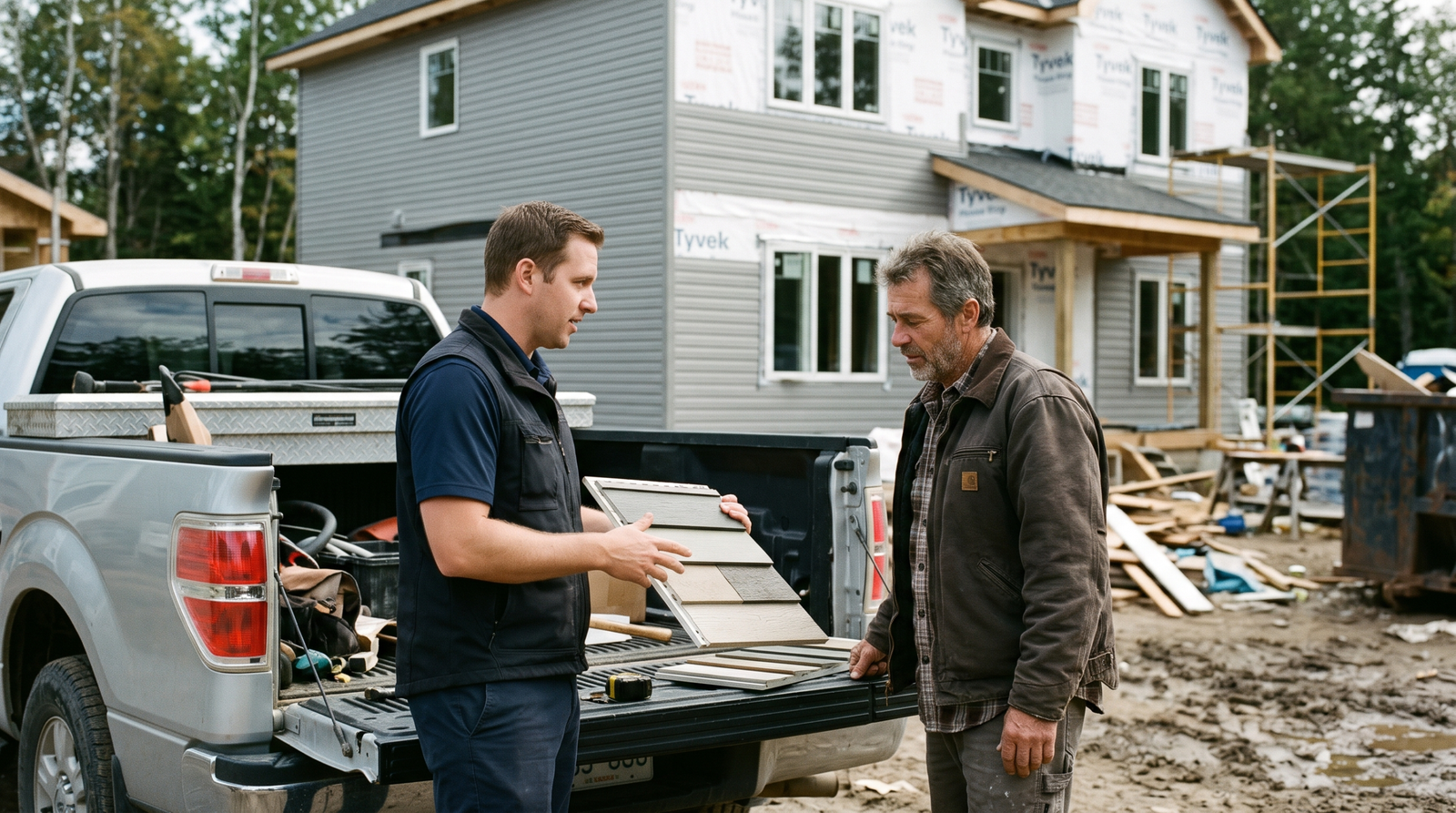
Why marketing to contractors is a different job
At Brand Builds we use a simple framework: a product must be specified, invited and chosen. The architect specifies it. The builder or dealer invites it onto the job. Then the contractor chooses it, or quietly swaps it for something familiar.
That last step is where many brands lose. The specification says one thing, and the truck arrives with another. Therefore, marketing to contractors is really the work of defending the choice at the point of install.
What the research says about how pros choose
The Farnsworth Group surveys builders, remodelers and general contractors each year. Its 2026 guide reports that 88% of residential general contractors and remodelers name quality as the top purchase driver. Availability is a critical second factor for 63% of trades. Note that the page does not state a sample size.
The same guide shows loyalty is softer than most brands assume. Only about 38% of residential contractors and remodelers call themselves very loyal to a brand. Meanwhile, nearly 51% of them tried a new brand in 2025, up from 47% a year earlier.
What that means for your brand
- Your installed base is not safe, because half the market tries something new each year.
- Your competitor’s base is not safe either, so the door is open.
- Quality and availability beat clever advertising, so prove both first.
Start where contractors already buy
Many marketing plans ignore the counter. That is a mistake. The Home Improvement Research Institute reported in April 2026 that about 50% of contractors or more used big-box stores most often for nearly every product category. Its purchase study draws on roughly 1,200 remodelers, general contractors and specialists.
Direct purchase from the manufacturer was far less common. For example, it was the most used channel for 13% of contractors buying windows and 9% buying cabinets. As a result, your dealer or retailer is usually the real sales floor.
Give the counter something to say
Counter staff recommend what they understand. Therefore, train them before you advertise. Give each dealer a one-page install summary, a sample that can be handled and a clear answer on lead times. Our post on building product marketing shows how to split a budget across specifiers, dealers and buyers.
| Stage | Who decides | What marketing must prove |
|---|---|---|
| Specified | Architect or designer | Performance, documentation and code fit |
| Invited | Builder, dealer or distributor | Supply, margin and support |
| Chosen | Trade contractor or installer | Easy install, few callbacks and stock on hand |

Build proof an installer can check in two minutes
Contractors research more than brands expect. Farnsworth’s 2026 guide found that 80% of residential remodelers and general contractors use supplier websites for online research. In addition, 53% use YouTube. So your website and your video library are sales tools, not decoration.
However, most manufacturer websites are built for the architect. The installer lands on a page of renderings and leaves. Instead, give each product an installer page with these five items:
- An install guide that opens on a phone without a login.
- A short video filmed on a real job, showing the awkward step.
- A list of tools and fasteners needed.
- Warranty terms in plain language.
- A dealer locator that shows who stocks it nearby.
Our construction video production team films these on site, because a studio demo never shows the hard corner. Likewise, a steady content marketing programme keeps the answers current as products change.
Remove the fear of switching
A contractor who switches brands carries the risk personally. If the product fails, the homeowner calls the contractor, not you. An older HIRI study from 2021 found that 49% of remodeling companies had predetermined brands for all tools and materials. Poor quality was the top reason given for switching project materials, cited by 38%. That figure is dated, yet the logic still holds.
Therefore, design your marketing around lowering that risk. Offer a first-job support line. Send a rep to the first install. Put the warranty claim process on one page. In my experience, these small promises move more volume than a trade show booth.
Keep the specification and the install connected
Contractor marketing fails when it runs alone. The architect, the builder and the installer should hear one consistent story. Read our guides to marketing to architects and marketing to home builders for the earlier stages. Then use product specification marketing to hold the spec when a substitution request arrives.
Pick your trades before you pick your tactics
Marketing to contractors is not one audience. A roofer, a framer and a kitchen remodeler buy differently. Therefore, pick the two or three trades that install most of your volume. Then build the installer page, the video and the dealer training for those trades first. In my experience, a narrow start beats a broad launch, because marketing to contractors rewards depth over reach.
Measure what the contractor actually does
Do not judge this work by impressions. Instead, track signals that show an installer moved closer to choosing you.
- Install guide downloads and video completions by product.
- Dealer locator searches by region.
- Sample and first-job support requests.
- Repeat orders through each dealer after the first purchase.
Review these numbers with your sales team every quarter. Consequently, marketing and sales will argue less about lead quality and more about which dealers need help.
Where Brand Builds fits
Brand Builds works only with construction, design and hardware companies, and our marketing services cover the dealer, specifier and installer stages described above. Plans start at $2,100 CAD a month, about US$1,500, and you can compare them on our pricing page. To see where contractors drop your product today, book a free marketing audit.
Frequently asked questions
It means giving trade contractors and installers the proof, training and supply confidence they need to choose your product on the job instead of swapping it for a familiar one.
Less than many brands assume. The Farnsworth Group 2026 guide reports that about 38% of residential contractors and remodelers call themselves very loyal, and nearly 51% tried a new brand in 2025.
HIRI reported in April 2026 that about half of contractors or more used big-box stores most often for nearly every category. Dealers and specialty suppliers matter more for some products, so check your own category.
Practical material they can check quickly: install guides that open on a phone, short job-site videos, tool lists, plain warranty terms and a dealer locator showing local stock.
It depends on the number of products, dealers and regions. Brand Builds plans start at $2,100 CAD a month, about US$1,500, before any advertising spend.