

Marketing to home builders works when you stop chasing a single purchase and start earning three decisions: the builder’s standard spec, the dealer’s shelf and the home buyer’s choice in the design centre.
Most building product brands treat a builder like a consumer. They run ads, send a brochure and wait for an order. However, a builder does not buy once. A builder sets a standard, and then repeats it across every lot for years.
In my view, that changes the whole job. This guide explains how I think about it for manufacturers and suppliers in the United States and Canada, using the specified, invited, chosen framework we use at Brand Builds.

Why marketing to home builders is harder right now
Builders are cautious, and cautious builders do not experiment. The U.S. Census Bureau reported privately owned housing starts at a seasonally adjusted annual rate of 1,309,000 in October 2026. Single-family starts came in at 864,000, which is 3.2% below October 2025. In addition, single-family permits fell 12.9% from a year earlier.
NAHB chairman Bill Owens said the gain in total starts “is encouraging but does not necessarily signal a sustained recovery.” Canadian builders face similar pressure, as our post on residential construction marketing explains.
What caution does to brand choice
When margins tighten, a builder protects the schedule first. Therefore, the product that arrives on time and installs without callbacks wins. A new brand looks like risk, even when it is better.
BUILDER’s 2023 Brand Use Study, which surveyed 1,000 builders, developers and general contractors, supports this. Only 18.3% of respondents said they were “much more willing” to try new brands. That study is three years old, so treat the figure as directional. Still, I see the same reluctance in conversations with suppliers today.
How builders actually pick products
The same study ranked the factors behind brand choice. Product performance came first, together with availability through the builder’s preferred dealer. Price and warranty followed. As a result, your marketing has to prove performance and remove supply doubt before it talks about price.
Who makes the decision
An older NAHB survey, reported by BUILDER without a clear date, adds useful detail on where builders shop and who decides. The pattern matters more than the exact year:
- Builders made over 80% of decisions on basic materials such as lumber, siding, windows and doors.
- About half of builders left electrical supplies and HVAC choices to their subcontractors.
- Home buyers drove the choice most often for appliances (36%), lighting (34%) and flooring (32%).
- About three-quarters of builders bought lumber and sheathing from a lumberyard.
So the buyer of your product is rarely one person. For windows, it may be the purchasing manager. For HVAC, it is the trade. For flooring, it is often the home buyer standing in a design centre.
The three decisions you have to win
I map every builder account to three decisions. Each one needs different marketing, and most brands fund only one of them.
| Decision | Who makes it | What they need from you |
|---|---|---|
| Specified | Purchasing, construction manager, architect | Performance data, install details, warranty terms, code documents |
| Invited | Dealer, distributor, trade contractor | Stock, lead times, training, a rep who answers the phone |
| Chosen | Home buyer and design consultant | Samples, clear upgrade stories, photos of finished homes |
Specified: get into the standard features list
A builder’s standard spec is the most valuable page you can appear on. Once your product is the standard, every start becomes an order. Therefore, build a builder kit: a one-page performance summary, installation guide, warranty and a short case for fewer callbacks. Our guide to product specification marketing covers the documents in detail.
Invited: make the dealer want to quote you
Builders buy through channels they already trust. Consequently, a brand that the local dealer does not stock is a brand the builder cannot easily choose. Spend real marketing money on dealer support: co-branded quotes, counter training and local stock lists. I wrote more about this in window and door manufacturer marketing and building material distributor marketing.
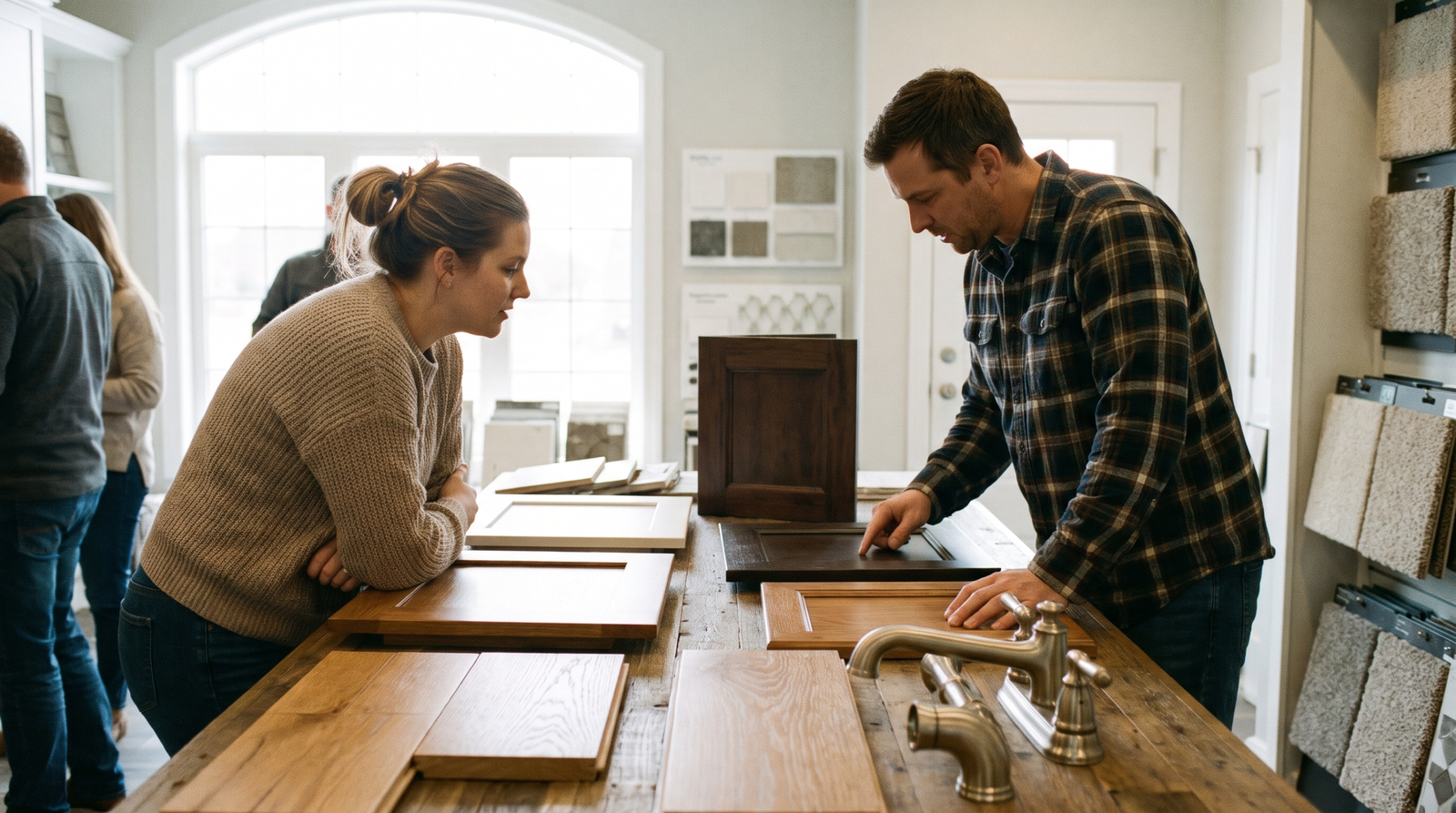
Chosen: help the builder sell the upgrade
For finish products, the home buyer makes the last call. However, the builder’s design consultant controls what the buyer sees. Give that consultant samples, a two-line upgrade story and photos they can use. In other words, market through the builder, not around them.
A practical plan for the next two quarters
Here is the sequence I would follow with a regional manufacturer. It is a working order from our planning, not an industry benchmark.
- List your top 50 builders by starts in your delivery area, and name the purchasing contact at each.
- Build the builder kit and a dedicated builder page on your website.
- Confirm which dealers serve those builders, and fix stock gaps first.
- Publish two or three project stories with a builder’s permission.
- Run targeted outreach by email and LinkedIn to purchasing and construction managers.
- Equip design centres with samples and upgrade sheets.
Meanwhile, make sure the builder page can be found. Purchasing teams search by product type and region, so construction SEO and steady content marketing matter here. Our LinkedIn ads for construction companies guide shows how to reach job titles directly.
What to measure
Do not count leads. Instead, count builders who added you to a standard spec, dealers who stock you and communities where you are installed. Those numbers move slowly, yet they compound. For a wider budget view, see building product marketing.
Mistakes I see most often
- Leading with price when the builder’s real fear is a late delivery.
- Ignoring the trade contractor who actually selects the product.
- Sending consumer advertising to a purchasing manager.
- Stopping after the first order, when the standard spec is still open.
Above all, remember that a builder who switches brands takes a risk on your behalf. Your marketing should make that risk feel small.
Where Brand Builds fits
Brand Builds works only with construction, design and hardware companies, and our marketing services cover builder kits, dealer programs and the search work behind them. Plans start at $2,100 CAD a month, about US$1,500, and the options are on our pricing page. To see where your builder program is leaking, book a free marketing audit.
Frequently asked questions
It means earning three decisions: a place in the builder standard spec, stock and support from the dealer or trade, and the home buyer choice in the design centre. Each decision needs its own materials.
In the 2023 BUILDER Brand Use Study, product performance and availability through a preferred dealer ranked as the top two factors, followed by price and warranty. The study is three years old, so use it as a guide.
It depends on the product. Builders usually decide basic materials, trade contractors often choose electrical and HVAC products, and home buyers frequently pick appliances, lighting and flooring.
Expect months, not weeks. Builders change standards between communities or model years, so plan for a long sales cycle and keep supporting the dealer while you wait.
It depends on the number of markets and channels. Brand Builds plans start at $2,100 CAD a month, about US$1,500, before any ad spend.

