

The right interior design marketing agency fills your calendar with qualified consultations, rather than simply growing a following that never books.
Design is a visual business, so most agencies pitch design firms on pretty feeds. Yet a beautiful grid does not pay a studio’s salaries. Booked discovery calls do.
This guide explains what design firms in Canada and the United States should look for, what the work should cost, and which questions separate a real partner from a portfolio-builder.

Why design firms are harder to market than they look
Interior design sits between two worlds. Residential clients buy on taste and trust. Commercial and trade clients buy on process, budget discipline and delivery.
The field is also crowded and slow-growing. The US Bureau of Labor Statistics projects employment of interior designers to grow 3% between 2025 and 2035, with roughly 7,700 openings a year. In short, differentiation matters more than volume.
The budget problem nobody names
Most enquiries arrive with no budget attached. Meanwhile, the projects worth having sit at the top of the range. The 2026 US Houzz & Home Study put the median renovation spend at $20,000 for 2025, while the top 10% of projects reached $150,000 or more.
That gap is the whole game. Marketing that attracts the median buyer will bury your team in small jobs, so a good partner targets the top decile deliberately.
What an interior design marketing agency should actually deliver
Ask for outcomes, not activity. Above all, the agency should be able to name the number of consultations it expects to generate and the sources they will come from.
Project pages that rank and sell
Each completed project deserves its own page: the brief, the constraints, the decisions and the result. Consequently, you build a library that ranks for how people search, such as “modern kitchen designer Toronto” or “hospitality interior designer Chicago”.
Google’s own guidance on creating helpful, people-first content rewards exactly this: original detail from people who did the work. Thin service pages will not do it.
Local visibility for the studio
Many design clients search locally before they search by style. Google’s local ranking guidance names relevance, distance and prominence as the three signals behind map results. Therefore, a complete profile, steady reviews and consistent listings are basic requirements, not extras.
Photography and content that earns the enquiry
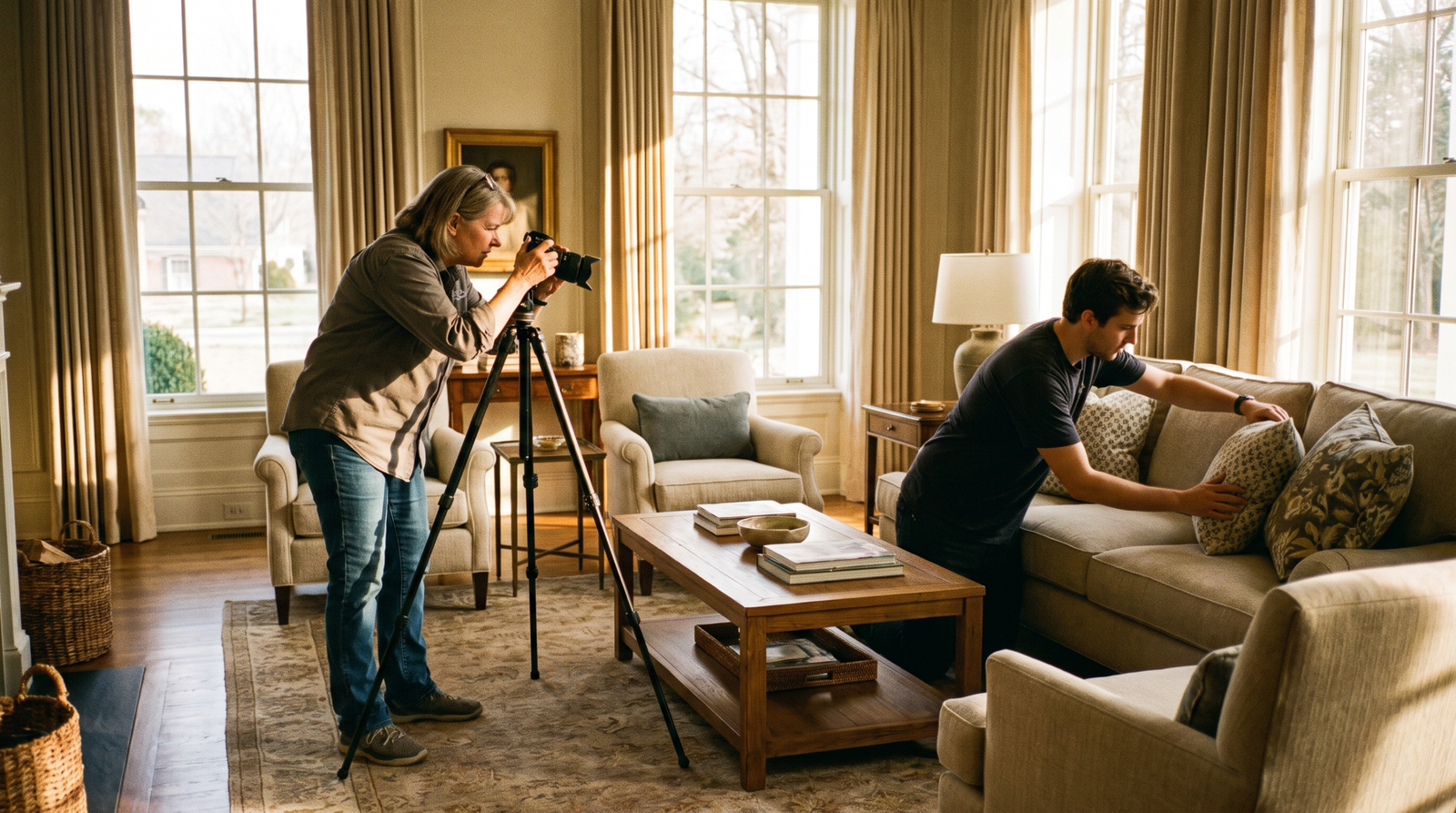
Nothing sells design like the work itself. A partner should plan shoots, build a reusable asset library and cut it for every channel. Our video production and social media marketing pages describe how that pipeline runs.
Nine questions to ask before you sign
- Which of your clients are design firms, and may we call two of them?
- How will you measure success: consultations booked, or impressions?
- What is your plan for attracting larger-budget projects specifically?
- Who writes the project pages, and do they interview our designers?
- How do you handle photography rights and asset ownership?
- Which accounts will be created in our name?
- What happens in month one, and what ships by day 30?
- How do you qualify enquiries before they reach our team?
- What is the notice period, and what do we keep if we leave?
Two answers matter most. First, ownership of accounts and assets. Second, a measurement plan that counts booked consultations rather than reach.
What it costs, in CAD and USD
Design firms usually need fewer channels than a contractor, but higher production quality. Budgets therefore cluster around content and search rather than heavy ad spend.
| Scope | Typical monthly range | Best suited to |
|---|---|---|
| Foundations: site, local search, listings | CA$2,100–3,500 (US$1,500–2,500) | Single-studio residential firms |
| Growth: search, content, project pages, social | CA$3,500–7,000 (US$2,500–5,000) | Firms adding a second market or sector |
| Full programme: plus video, PR and paid | CA$7,000–15,000 (US$5,000–10,800) | Multi-market and commercial practices |
Ad spend normally sits outside those figures. Similarly, photography and video shoots are usually quoted per production rather than bundled.
Specialist or generalist?
A generalist agency can build a competent website. However, it rarely understands why a trade programme matters, how a design fee is structured, or why a supplier relationship is worth protecting.
A specialist starts further along. Our page on marketing for interior design firms sets out that thinking, and our guide on how interior designers get clients covers the channels that consistently produce consultations.
Warning signs during the pitch
- The proposal leads with follower counts and engagement rates
- Nobody asks about your average project value
- They want to own the website, domain or ad accounts
- The deck shows work from restaurants and dentists, not design
- There is no plan for photography, the one asset you cannot fake
- Reporting stops at traffic and never reaches enquiries
How to brief an interior design marketing agency properly
The best results start with a clear brief. Write yours before the first call, and every proposal you receive becomes far easier to compare.
Name the work you want more of
List three completed projects you would happily repeat. Then note the budget, the sector and how each client found you. That short exercise tells an agency more than a mood board ever will.
Set a floor on project size
Decide the smallest project worth a consultation, and say it out loud. Afterwards, your enquiry form can filter on it. Studios that skip this step spend their week quoting work they never wanted.
Agree what gets measured
Pick two numbers and hold everyone to them. Booked consultations and signed proposals suit most design firms. Traffic and followers may appear in the report, although they should never lead it.
Protect the calendar
Marketing creates demand, yet somebody still has to answer it. Decide who replies to enquiries, and how fast, before any campaign goes live. A two-day reply time will quietly undo good work from any interior design marketing agency.
Finally, agree how your website will keep pace. New project pages need somewhere sensible to live.
Where Brand Builds fits
We work only with construction, design and hardware companies across Canada and the United States, so design firms are core to what we do. Every account and asset stays in your name, and plans start at $2,100 CAD a month, about US$1,500. See our pricing, read how we work, or book a free marketing audit.
Frequently asked questions
It builds the channels that bring qualified clients to a design studio: a website and project pages that rank, local search and reviews, photography and video, social content and email. Good ones report on booked consultations rather than followers.
Most single-studio firms start between CA$2,100 and CA$3,500 a month, roughly US$1,500 to US$2,500. Multi-market and commercial practices running video, PR and paid media commonly spend CA$7,000 or more.
Publish detailed project pages for the work you want more of, price and qualify on your enquiry form, and target searches that match higher-budget work. Marketing built around your median job will keep producing median jobs.
Social builds recognition, but it rarely captures people who are actively searching for a designer today. Pair it with local search, project pages and email so that demand you create somewhere else still finds you later.
Expect quick wins from a completed Google Business Profile and a working enquiry form within weeks. Project pages and local search rankings usually take three to six months to mature, so plan a two-quarter commitment.

