

Local SEO for contractors is the work that puts your business in the Google map pack when someone nearby searches for your trade. It rests on three signals Google names itself: relevance, distance and prominence. You cannot move your shop closer to every customer, but you can control the other two.
This guide shows contractors in Canada and the United States how the map pack works. It also covers what to fix first and how to measure results in booked jobs, not rankings.
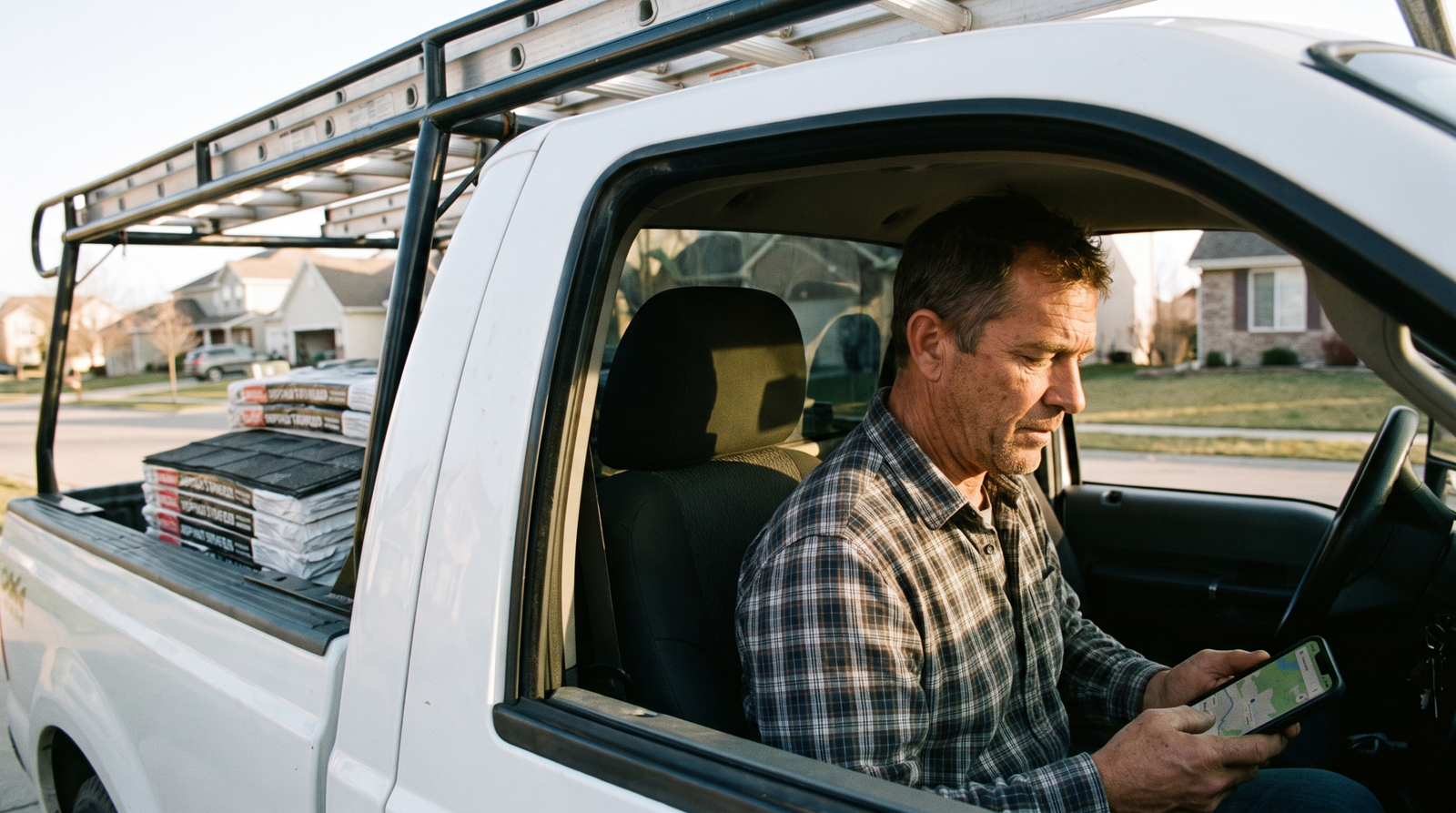
How local SEO for contractors actually works
When a homeowner types “roofer near me” or “basement contractor in Hamilton”, Google shows a map with three businesses under it. That block is the map pack. Below it sit the regular organic results, and often ads sit above it.
According to Google Business Profile Help, local results are based mainly on relevance, distance and prominence. In plain terms, Google asks three questions:
- Relevance: does this business clearly do what the searcher wants?
- Distance: how close is it to the searcher, or to the place they named?
- Prominence: how well known and trusted is it, based on reviews, links and mentions?
Distance is mostly out of your hands. Therefore, local SEO for contractors focuses on relevance and prominence, and on making sure Google has accurate facts about your service area.
Why the map pack matters more for trades
Most trade searches carry urgent, local intent. A leaking roof or a failed furnace is not a research project. As a result, the searcher often calls one of the first three names they see. If you are not in that block, you are rarely in the running.
Step 1: Set up your Google Business Profile the right way
Your Google Business Profile is the foundation of every map pack ranking. Our guide to Google Business Profile for contractors covers the setup in detail. Here, we focus on the choices that trip up trades most often.
Service area versus storefront
Most contractors work at the customer’s home or job site. Google’s guidelines for representing your business say a service-area business should hide its address and set a service area instead. The same guidelines suggest the overall area should not extend much beyond about two hours of driving from your base.
So list the towns and regions you really serve. Adding a hundred cities will not help, and it can make your profile look less accurate.
Categories, services and photos
Next, choose the most specific primary category that describes your core business, such as “Roofing contractor” rather than “Contractor”. Google’s guidelines also ask you to use as few categories as possible. After that, add each service you offer with a short, plain description.
Photos matter too. Upload real project photos with before and after shots, your crew and your trucks. Stock images add nothing, because they prove nothing about your work.
Step 2: Build service and location pages Google can trust
Your website feeds the relevance signal, so it is the second pillar of local SEO for contractors. If your site has one generic “Services” page, Google has little to match against specific searches. Instead, build one strong page per core service.
For example, a renovation firm might have separate pages for kitchens, basements and additions. Each page should explain the work, show local projects, answer common questions and include a clear call to book an estimate.
Location pages without the spam
Location pages work when they contain real local proof. However, pages that swap one city name for another and change nothing else rarely help. A good location page mentions projects in that area, local permit or climate issues, and reviews from customers nearby.
Technical basics and schema
Meanwhile, the site itself must load fast on a phone. It should also show your name, service area and phone number the same way everywhere. Adding LocalBusiness structured data helps search engines read those details. Our website design for construction companies service builds this in from day one.
Step 3: Earn reviews and local prominence
Reviews are the most visible part of prominence, and homeowners read them closely. The BrightLocal Local Consumer Review Survey 2026 found that 97% of consumers read reviews for local businesses. It also found that 68% will only use a business rated four stars or higher, up from 55% the year before.
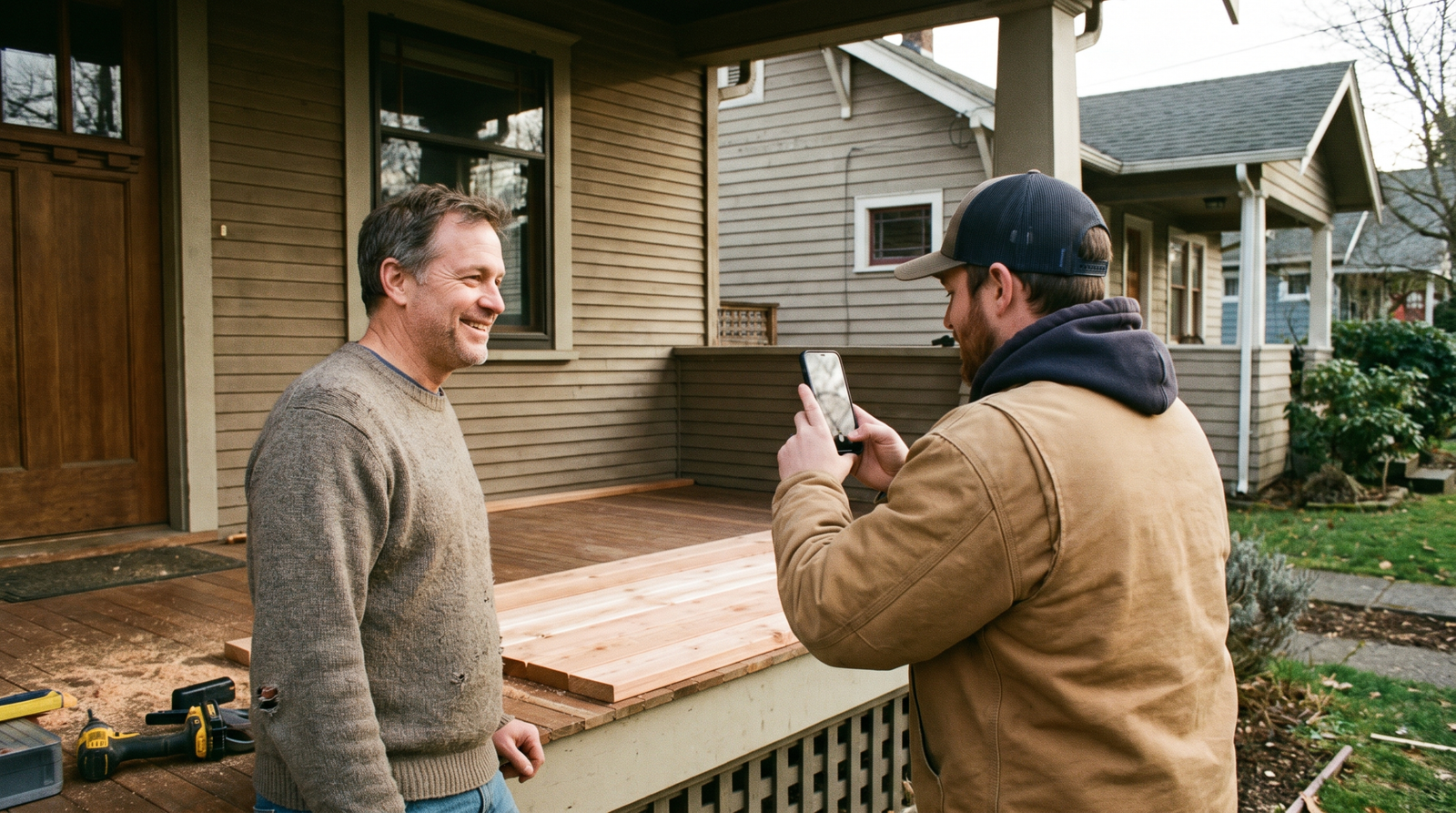
A simple review system
Most happy customers will leave a review if you ask at the right moment. The best moment is usually right after final walkthrough or final payment. To make it easy:
- Create a short review link from your Google Business Profile.
- Send it by text on the day the job wraps up.
- Follow up once, a few days later, if needed.
- Reply to every review, positive or negative, within a few days.
Never offer discounts or gifts in exchange for reviews. Google does not allow it, and it puts your profile at risk.
Citations, links and mentions
Beyond reviews, prominence grows when trusted sites mention you. Start with consistent listings on the directories that matter, which we cover in business listings for contractors. Then look for supplier dealer locators, trade association member pages, local sponsorships and local news coverage.
Local SEO and AI search
Homeowners now ask AI tools for recommendations, too. In the same BrightLocal survey, 45% of consumers used ChatGPT or other AI tools for local recommendations. A year earlier, that figure was 6%. Those tools often lean on the same reviews, listings and website content that drive the map pack. In other words, strong local SEO also improves your chances of being named by AI. Our article on AI in construction marketing goes deeper.
Common local SEO mistakes contractors make
Even busy, well-run companies fall into the same traps. Watch for these:
- Stuffing city names or keywords into the business name on Google
- Using a virtual office or a mailbox as a business address
- Listing a different phone number on every directory
- Letting reviews go quiet for months at a time
- Building one thin page per town with no real projects on it
Each of these can hold back local SEO for contractors, and a few can get a profile suspended. Fixing them is usually quick, so start here before you spend money on ads.
How to measure local SEO for contractors
Rankings alone can mislead, since results change with the searcher’s location. Instead, track the actions that lead to revenue.
| Metric | Where to find it | Why it matters |
|---|---|---|
| Calls from your profile | Business Profile performance | Direct sign of map pack demand |
| Direction requests and website clicks | Business Profile performance | Shows interest beyond the listing |
| Form fills and booked estimates | Website analytics and your CRM | Connects search to real jobs |
| Review count and average rating | Google Business Profile | Tracks prominence over time |
| Signed jobs by source | Your CRM or job software | The only number that pays the bills |
Most contractors see profile improvements within weeks, while website and review gains build over several months. If you want help reading the data, see our guide to hiring a construction SEO company.
Plain-English glossary
Tap any term below for a simple explanation.
Map pack
The block of three businesses with a map that Google shows for many local searches, above the normal results.
Relevance
Google’s first local signal: how clearly your profile and website say you do exactly what the searcher wants.
Distance
Google’s second local signal: how close your business is to the searcher or the place they named. Mostly out of your control.
Prominence
Google’s third local signal: how well known and trusted you appear, built from reviews, links, listings and mentions.
Service-area business
A business that works at the customer’s property instead of receiving customers at an office — most contractors. On Google, it hides its address and lists the areas it serves.
Citations (NAP)
Your Name, Address and Phone listed on other sites. Matching details everywhere make Google more confident about who and where you are.
LocalBusiness schema
Hidden code on your website that labels your business facts so search engines read them correctly.
GEO (AI recommendations)
Making your company easy for AI tools like ChatGPT to find and name. It leans on the same reviews, listings and pages as the map pack.
Where Brand Builds fits
Brand Builds runs construction SEO and local search for contractors across Canada and the United States, measured in calls and booked estimates. Plans start at $2,100 CAD a month, about US$1,500, and you can see every option on our pricing page. When you are ready, book a free marketing audit.
Frequently asked questions
It is the work that helps a contractor appear in the Google map pack and local results for searches in their service area. It covers the Google Business Profile, service pages, reviews, listings and local links.
Profile fixes can show results within weeks. Service pages, reviews and local links usually build over three to six months, depending on how competitive your trade and market are.
If you work at customer sites and do not receive customers at your office, Google guidelines say you should hide your address and set a service area instead.
There is no fixed number. You need a steady flow of recent, genuine reviews and a strong rating, ideally four stars or higher, compared with the other contractors in your area.
Costs depend on your market and how many services and areas you target. Brand Builds plans start at $2,100 CAD a month, about US$1,500.

